
Commercial Pest Control
Professional pest control solutions and pest management services for businesses that demand clean, compliant, pest-free facilities
Call now for a FREE inspection and quote – no obligation!
Thorough Inspections
Every room, crawl space, attic, and basement examined
Tailored Treatment Plans
Personalized IPM strategies for your specific situation
Eco-Friendly Products
Safe for your family and pets, tough on pests
Guaranteed Results
Free re-treatment if pests return between visits
5 Highlights of Our Commercial Pest Control
Licensed technicians inspect and treat
every commercial property using Integrated Pest Management protocols. Our certified pest controllers identify rodent burrows, ant trails, cockroach harborage areas, and termite entry points before applying targeted treatments for cockroach control, termite control, and rodent control that meet EPA regulations.
Routine monitoring keeps facilities compliant
We install bait stations, pheromone traps, and glue boards throughout warehouses, restaurants, hotels, and food facilities. Each monitoring device gets logged in a detailed pest report for your HACCP documentation.
We exterminate infestations fast
Rats, mice, cockroaches, bed bugs, ants, mosquitoes, flies, and stored product beetles don’t survive our commercial treatment programs. Our technicians fumigate, bait, trap, and spray based on the specific pest species and severity.
Eco-friendly and non-toxic options available
Biodegradable pesticides, organic larvicides, and residual insecticides let us control pests without disrupting your daily operations. We match the product to your industry’s safety requirements, whether the job calls for ant control, mosquito control, or general bug control.
Ongoing service contracts prevent reinfestation
Preventive maintenance plans include scheduled inspections, perimeter barrier treatments, and exclusion sealing for long-term, year-round protection. You get a dedicated pest controller who knows your building inside and out.
Why Choose Our Commercial Pest Control
Commercial pest control is a specialized discipline. Not every exterminator understands the regulatory demands of a hospital kitchen, a pharmaceutical warehouse, or a school cafeteria. A Scientific Pest Control delivers extermination services and pest services built for these environments.
Our team holds state and federal certifications for applying insecticides, rodenticides, herbicides, and fungicides in commercial environments. Every technician carries proper protective equipment, including respirators, gloves, and coveralls, and follows safety data sheet protocols and quality assurance procedures for each product applied on your property.
We’ve built our reputation on three commitments. First, we respond to emergency infestations within 24 hours. A rat colony in a restaurant or a bed bug outbreak in a hotel can’t wait for pest elimination. Second, we guarantee results. If pests return between scheduled treatments, we re-treat at no additional charge. Third, we operate discreetly. Our unmarked vehicles and uniformed technicians service your facility without alarming customers or staff.
Our commercial pest control programs align with health code standards, HACCP requirements, and EPA compliance guidelines. We maintain detailed logbooks and pest reports that satisfy auditors and inspectors. Every bait station gets mapped. Every treatment gets documented.
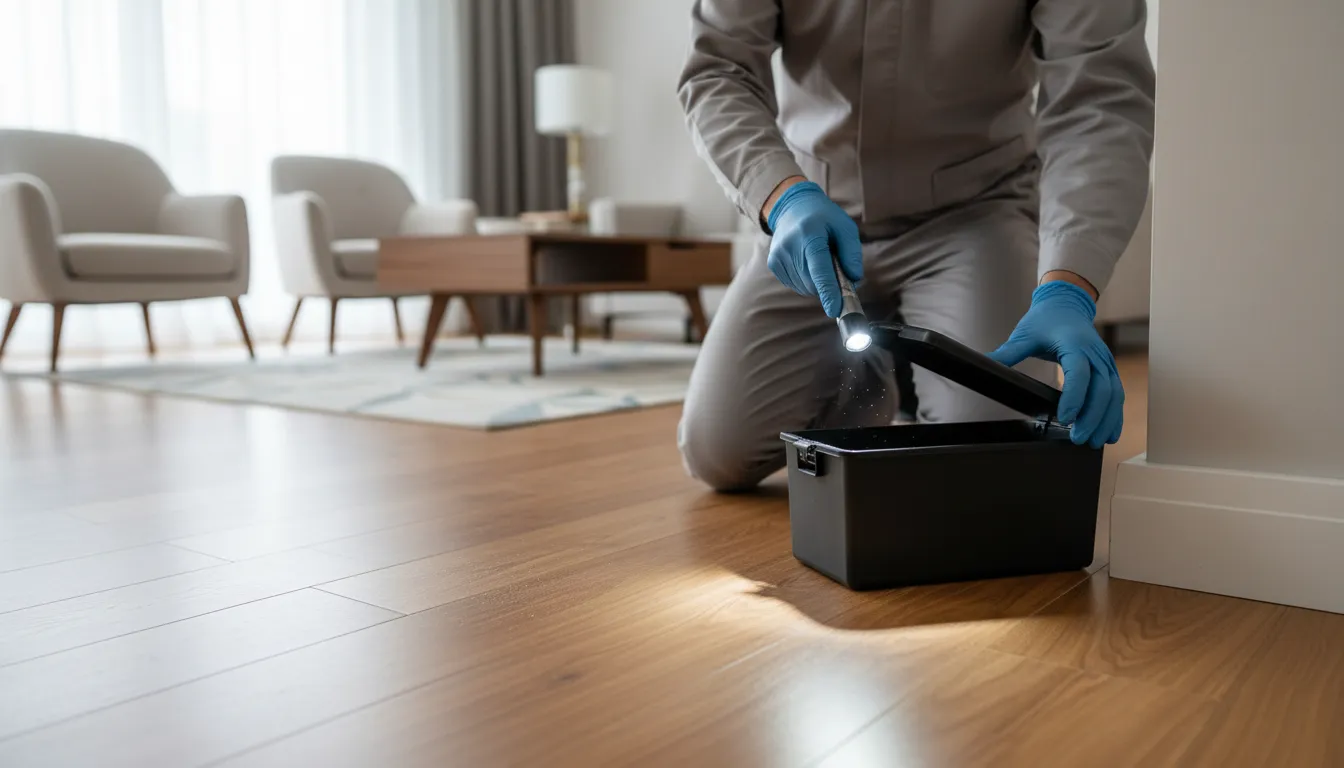
Businesses across the food service, hospitality, healthcare, education, and industrial sectors trust A Scientific Pest Control to keep their facilities sanitary, safe, and pest-free year-round.


Don't Let Pests Take Over Your Home
Our California pest control experts are ready to protect your property. Call us today for a free, no-obligation inspection.
Signs You Need Commercial Pest Control
Commercial pest control becomes urgent when you spot these five warning signs in your facility.
Droppings in storage areas or kitchens:
Rodent droppings near pantry shelves, along baseboards, or inside storage rooms indicate an active rat or mouse population. A single mouse produces 50 to 75 droppings per day. By the time you see them, the infestation has already established itself. Our inspectors assess the volume and freshness of droppings to estimate colony size and pinpoint nesting locations.
Employees report insect sightings during daytime:
Cockroaches are nocturnal. If your staff sees them during business hours, the colony has grown large enough that individuals get pushed out of hiding. This signals a severe cockroach infestation that requires immediate fumigation or targeted insecticidal treatment in harborage zones behind equipment, inside wall voids, and beneath sinks.
Damaged packaging or gnaw marks on inventory:
Rats and mice chew through cardboard, plastic wrap, and even thin metal. Weevils and beetles bore into grain products, flour, and dried goods. Contaminated inventory means direct financial loss and potential health code violations. Our technicians identify the pest species, remove compromised stock, and install exclusion barriers at every entry point.
Flying insects near light fixtures and doorways:
Flies, moths, mosquitoes, and wasps congregating around your building’s exterior or interior lights suggest breeding sites nearby. Drain flies breed in floor drains. Fruit flies reproduce in decomposing organic matter. Moth larvae infest stored textiles and food products. Each bug species demands a different treatment approach, from larvicide application to drain sanitation.
Failed health inspections or audit findings:
A pest-related citation from a health inspector or a flagged HACCP audit means your current pest management isn’t working. We review your existing pest report documentation, identify gaps in coverage, and build a compliant commercial pest control program from the ground up.
California Structural Pest Control
General Liability & Workers’ Comp
Ongoing IPM Training
EPA-Compliant Products
Our Commercial Pest Control Process
Commercial pest control starts with a comprehensive facility inspection. Our licensed inspector surveys your entire property, inside and out. We check entry points around doors, loading docks, utility penetrations, and rooflines. We examine harborage areas including wall voids, drop ceilings, equipment gaps, and drainage systems. We document every finding with photographs and detailed notes.
Next, we identify the pest species present. Accurate identification determines the treatment method. A termite infestation requires a specialized termite treatment protocol different from a cockroach colony, a spider control program, or a rodent problem. We collect specimens, analyze droppings, and assess damage patterns.
Then we build your custom treatment plan. This plan specifies which pesticides, traps, bait stations, and exclusion methods we’ll deploy. It includes a site map showing monitoring device placement and treatment zones. It outlines the service schedule, whether weekly, biweekly, or monthly.
Our technicians execute the plan. They apply residual insecticides along baseboards and entry points. They install snap traps and bait stations in rodent runways. They seal cracks, gaps, and openings with exclusion materials. They implement bird control deterrents where needed. They treat drain lines, dumpster areas, and exterior perimeters.
After each visit, we update your logbook and pest report. You receive a written summary of findings, treatments applied, and recommendations. Ongoing monitoring lets us detect new activity early and adjust the program before pests gain a foothold.
Ready to Get Started?
Three simple steps: Call us, schedule your free inspection, and enjoy a pest-free home.
Brands We Use
Commercial pest control demands professional-grade products from manufacturers that meet strict EPA registration standards. A Scientific Pest Control uses only trusted, regulated brands in every treatment we perform.








Every product we apply comes with a safety data sheet. Our technicians wear full protective equipment during application.
Other Services
Commercial pest control
Business pest control services
Integrated pest management for businesses
Commercial exterminator
Professional pest extermination
Licensed pest control technician
Commercial pest management
Corporate pest control program
Routine pest inspection and monitoring
Commercial fumigation services
Industrial fumigation treatment
Tenting and fogging for commercial buildings
Commercial rodent control
Rat and mouse extermination for businesses
Bait station installation and rodent exclusion
FAQs About Commercial Pest Control
What does commercial pest control include?
Commercial pest control covers inspection, identification, treatment, monitoring, and prevention for business properties. Our service addresses rodents, cockroaches, termites, bed bugs, flies, ants, spiders, mosquitoes, stored product pests, and wildlife like birds and squirrels. Specialized programs include bed bug control, spider control, and rodent control. Each program includes scheduled visits, documented pest reports, and compliance-ready logbooks.
When should a business schedule pest control?
Schedule commercial pest control before an infestation develops. Preventive service contracts with monthly or biweekly inspections catch problems early and support long-term pest elimination. If you’ve already spotted droppings, live insects, damaged goods, or received a health code citation, call us immediately for an emergency assessment.
Why is commercial pest control different from residential?
Commercial facilities face stricter regulations. Restaurants must meet health department and HACCP standards. Hospitals require sanitary environments with non-toxic treatments. Warehouses need large-scale rodent exclusion programs. While residential pest control and residential termite services focus on individual homes, commercial pest control uses industrial-grade products, larger monitoring networks, and detailed documentation that residential service doesn’t require.
How often do commercial properties need pest treatment?
Most businesses benefit from monthly service. Food facilities, hotels, and healthcare buildings often need biweekly visits. Your service frequency depends on pest pressure, facility size, industry regulations, and seasonal activity. We adjust your year-round maintenance plan as conditions change to deliver long-term results.
Can commercial pest control be done without closing the business?
Yes. Our technicians apply targeted, low-odor treatments that let you keep operating. We schedule service during off-hours when possible. For severe infestations requiring fumigation or tenting, we’ll coordinate a timeline that minimizes downtime and prevents re-infestation.
Does A Scientific Pest Control provide documentation for audits?
We maintain complete records for every visit. Your logbook includes pest activity reports, treatment details, product safety data sheets, monitoring device maps, and corrective action notes. These documents satisfy health inspectors, HACCP auditors, and corporate quality assurance and compliance teams.
Protect Your Home Today
Get expert commercial pest control backed by science, delivered by certified professionals across California. Your free inspection is one call away.